Houston Hurricane Season Roof Prep Checklist
A practical, step-by-step checklist to get your roof, gutters, and paperwork ready before a Gulf storm heads toward Houston.
Read MoreFiling a roof insurance claim can feel overwhelming, especially when you are already dealing with storm damage. The good news is that the process follows a predictable path. Knowing each step, and the common mistakes, helps you get a fair result and avoid delays.
This guide covers how roof claims generally work in Texas. Every policy is different, so always read your own policy and talk to your agent about specific questions.
If water is coming in, protect your home first. Most policies require you to take reasonable steps to prevent further damage, such as tarping the roof or covering openings. Keep receipts for any temporary repairs, since these costs are often reimbursable. Do not make permanent repairs before the adjuster sees the damage.
Before you file, have a reputable local roofer inspect the roof. This tells you whether there is real storm damage and roughly how extensive it is. Filing a claim for damage that does not exist, or that is just normal wear, can create a claim record without a payout. A good roofer will tell you honestly if your roof does not have enough damage to justify a claim.
Contact your insurer by phone, app, or online portal. Your policy will state how quickly damage must be reported, and Texas law lets insurers set deadlines for filing. Waiting weeks or months makes it harder to prove the damage came from a specific storm. You will receive a claim number. Use it in every communication.
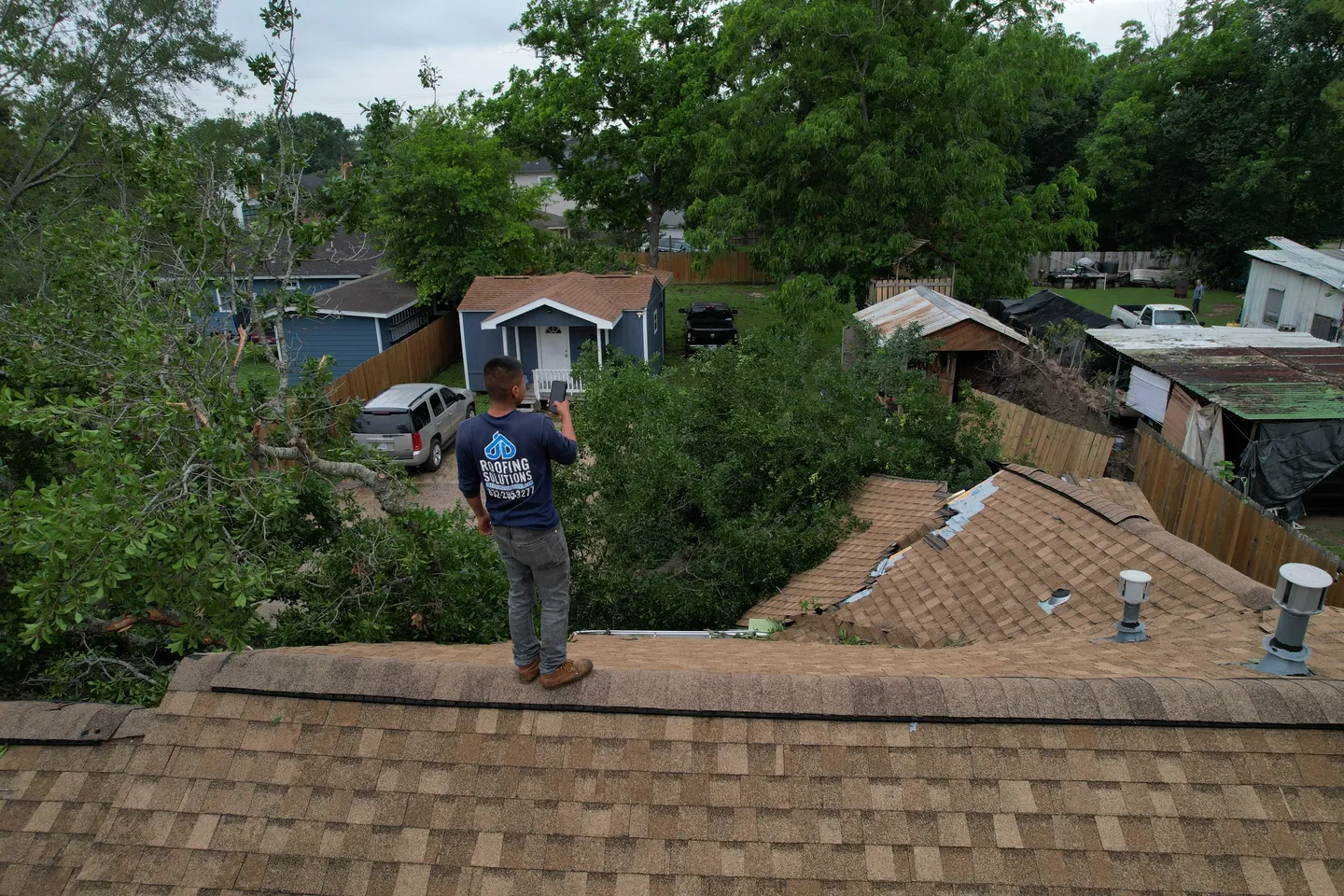
The insurance company will send an adjuster to inspect the damage. It helps to have your roofer present for this meeting. Your roofer can point out damage the adjuster might miss, such as bruised shingles, damaged flashing, or soft metal impacts, and discuss the scope of repairs. Be polite and factual. The adjuster's report will drive the initial settlement.
You will receive a written estimate, often called the scope of loss. Compare it line by line with your roofer's findings. Common items that get left out include:
Our guide to reading a roofing estimate explains what each line item means.
If you have a replacement cost value (RCV) policy, you will usually receive an initial check for the actual cash value, minus your deductible. The rest, called recoverable depreciation, is paid after the work is completed and you send proof. With an actual cash value (ACV) policy, depreciation is not paid back. See ACV vs RCV coverage explained.
If you have a mortgage, the check may be made out to both you and your lender. Your lender will have its own process for endorsing it.
Once the old roof is removed, your roofer may find hidden damage, like rotted decking. This is handled through a supplement, which is a request for additional payment backed by photos and documentation. If you disagree with the insurer's decision, you can ask for a re-inspection, provide additional evidence, and in many policies request appraisal. The Texas Department of Insurance (TDI) also provides consumer help for complaints.
JD Roofing Solutions helps Houston homeowners through the entire insurance claim process, from inspection to the adjuster meeting to final paperwork. Call 832-295-3277 to get started.
A practical, step-by-step checklist to get your roof, gutters, and paperwork ready before a Gulf storm heads toward Houston.
Read MoreWhat hail actually does to asphalt shingles, metal, and gutters, plus the safe ground-level checks you can do after a storm.
Read MoreThe first 48 hours matter. Here is what to do, what not to do, and how to protect your home and your claim after storm damage.
Read More